 Dexon Technology
What do engineers do when they have an in-line inspection system, decked out with sensitive, expensive transducers – and they are unsure how it will handle challenging turns?
The wrong answer: send it in with all the sensitive electronics and hope it works.
But good engineers do not put complete trust in diagrams and calculations – they put trust tests that closely replicate conditions on site, making sure that theory aligns with reality.
This is where the mechanical test pig comes in.
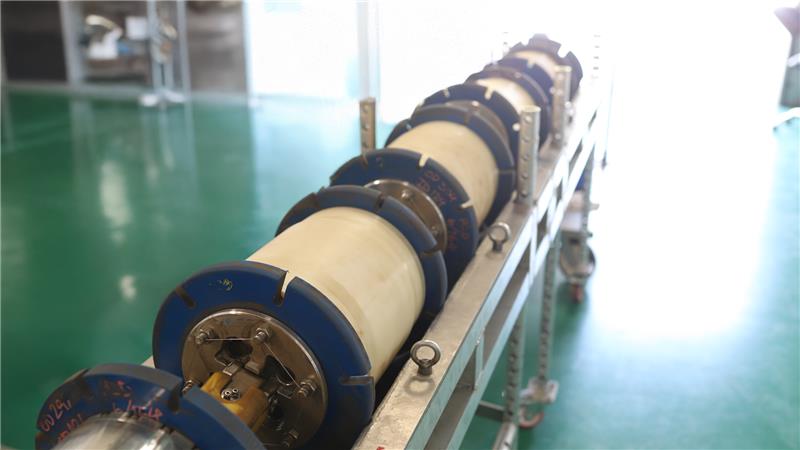
When assessing whether an ILI system’s specifications can navigate the bends and pressures of operation, our engineers take the skeleton of the ILI tool, stripped of its sensitive transducers and other electronic parts, and replace it with an nylon body.
Then, they run it through our infinity loop, a closed-loop pipeline built to reflect conditions on site.
As it navigates the line, they carefully monitor to ensure that it can successfully pass all turns without issue.
Once the pig is removed from the pipeline, the nylon body is then carefully inspected for any gouges, scratches, or other marks that indicate difficulty navigating and indicate the possibility of damage if the transducers are installed.
In this case, the 24-in. UT-CD Hawk body proved itself capable of navigating the complex lay-out awaiting it, giving confidence to engineers to proceed with the next step of preparation: in-situ testing with the expensive load out to see how well it can perform.